Each site is different
A panel model, device history, access procedure, and prior finding can change how a visit starts. Experienced technicians carry those details in their heads; a growing team needs them in the job record too.
Our focus / 03
← All focus areasSecurity and fire safety companies protect people and places through skilled field work and dependable follow-through. We explore how AI can carry the right site history into each visit and make reviewed findings easier for customers to understand, while qualified professionals retain every safety and compliance decision.
Talk about your business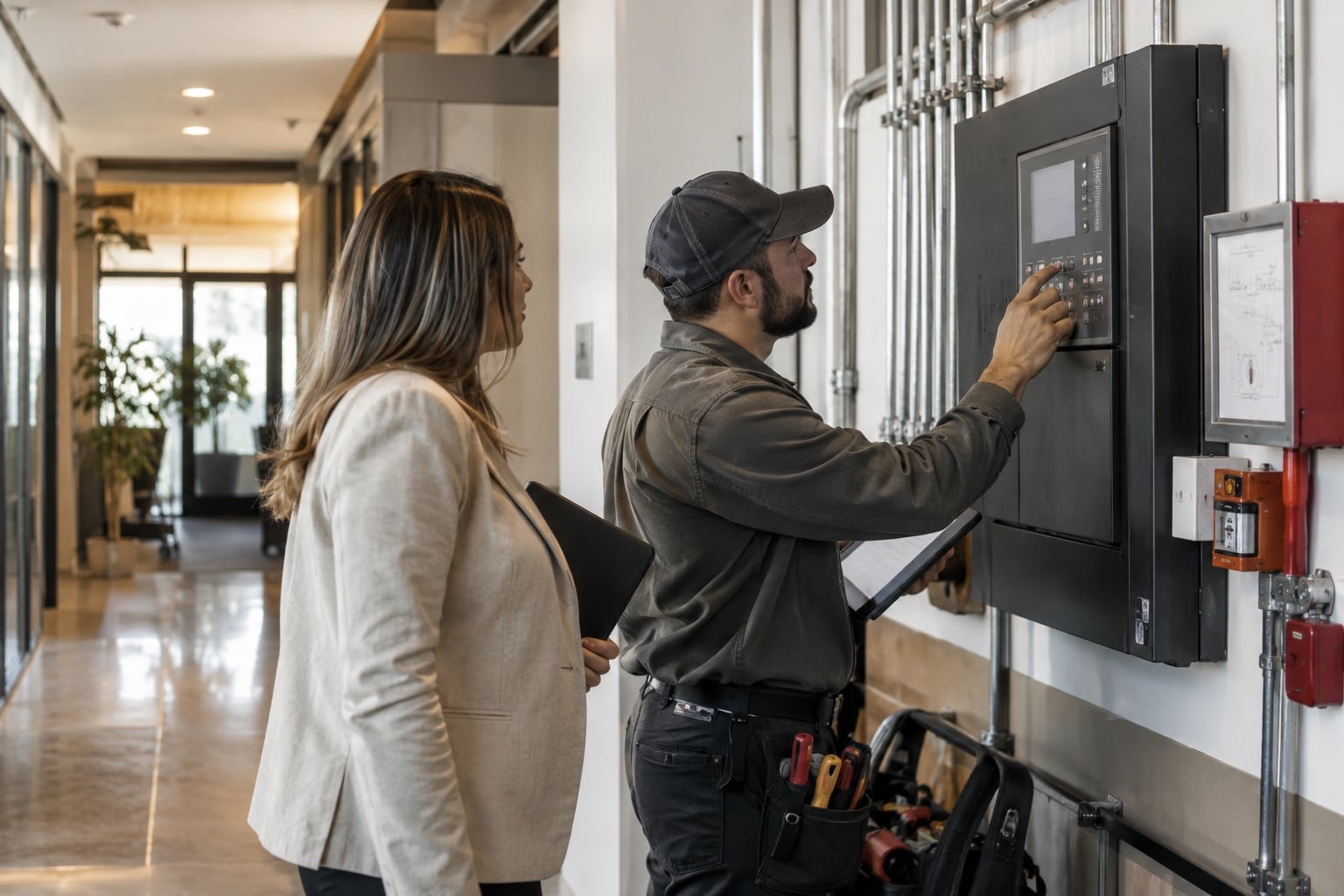
What you have built
A fire and security service company is built by technicians who know the equipment, dispatchers who keep promises, and customers who trust the record. Better coordination should strengthen that craft.
A panel model, device history, access procedure, and prior finding can change how a visit starts. Experienced technicians carry those details in their heads; a growing team needs them in the job record too.
A test result, device ID, photo, and technician note explain what was found. The customer needs a reviewed record they can use, especially when a repair remains open.
Findings may need a quote, approval, parts, a return trip, and a final customer update. The service company earns trust by making sure each step has an owner.
An illustrative example / 03
A technician finishes a fire-system inspection with voice and photo notes. One finding may need a quote, a return visit, and an explanation to the customer.
The notes, equipment history, prior findings, and open work are scattered. The office must reconstruct the record before it can coordinate the next step.
An AI assistant could turn those notes into a draft report and attach the relevant equipment and service history.
It could list potential follow-up items for the technician and office team to check and route.
The qualified technician confirms the findings, determines status and required action, and approves the final record.
Device ID, test result, photo, and voice note
Technician verifies the finding and required action
Estimator owns the quote; office tracks the return visit
Expert review: A qualified technician verifies the finding, determines status and required action, and approves the report. The team confirms who owns the quote or return visit.
The value of a better workflow
AI could organize the voice and photo notes into a draft report, link the relevant device history, and surface a possible open item for expert review and follow-up.
The customer could receive a reviewed report that explains what was found, what happens next, and who will follow through.
Less duplicate documentation can give technicians more time in the field and help leaders expand service without losing sight of open findings.
What we would measure together
AI at work / illustrative possibilities
These are concrete places to start a conversation with your team. The right workflows, tools, and controls would be chosen together for your business.
Before a fire-alarm service call, AI could assemble the panel model, last inspection, unresolved findings, site access notes, and prior repairs into a short job brief.
The technician checks the record, follows the site's procedures, and applies training and professional judgment on site.
Less time searching old tickets can mean a more useful first visit and a more confident customer conversation.
A technician records a failed battery test with device ID, result, photo, and voice note. AI could organize those materials into a draft inspection entry and connect it to the correct asset.
A qualified technician verifies the test, classifies the finding, determines required action, and approves the report under applicable rules.
The field record carries the evidence forward instead of depending on a later memory or a handwritten note.
An open deficiency needs parts, labor, and a clear scope. AI could prepare a draft quote from the reviewed finding, asset history, prior jobs, and the company's pricing rules.
An estimator confirms the diagnosis, code context, scope, availability, and price before the customer sees the proposal.
The building manager receives a timely, understandable repair option, and identified work is less likely to sit unquoted.
A technician calls out while an inspection deadline and a security-system repair both need attention. AI could propose a schedule using skills, certifications, travel, job priority, and service commitments.
The dispatcher checks qualifications and customer promises, adjusts the route, and approves it before release.
Technicians get a practical day, customers get clearer appointment expectations, and the owner can see where capacity is tight.
After closing, video analytics detects a person inside a warehouse loading-bay zone. A clip and location could reach the monitoring desk with the event rule and site details.
A trained operator reviews the footage and follows the customer's agreed response protocol before talkdown or dispatch.
The customer receives a documented response to a specific event, with a person making the consequential call.
A camera at one of a customer's sites stops uploading clips. A health alert could surface the affected device and last successful connection alongside the service history.
A service professional checks connectivity and configuration, explains the gap to the customer, and arranges repair when needed.
The customer learns about a coverage gap in the equipment before assuming an offline camera is still watching.
A second look / illustrative example
At 11:14 p.m., a configured camera rule detects a person near a closed warehouse loading bay. The event reaches a monitoring operator with a short clip, not a conclusion about intent.
A trained operator reviews the event and follows the customer's agreed protocol. Analytics can misclassify activity; camera placement, connectivity, privacy settings, and access permissions need ongoing attention.
The customer can see what triggered the response and what the operator did, rather than receiving an unexplained motion alert.
Person in after-hours loading-bay zone
FlaggedCamera, location, and event clip
Operator reviewClosing crew or authorized access?
VerifyTalkdown or escalation per protocol
Human decisionIllustrative work item. Not a live account, deployed product, or promised result.
A workday, reimagined
An illustrative day follows the handoffs between the desk, the field, the estimator, and the customer.
Service coordinator / illustrative dayThe coordinator reviews a proposed schedule against certifications, travel, and a customer deadline, then changes one assignment before technicians are dispatched.
A technician opens the panel's last test results and unresolved item on the mobile job record before entering the building.
The technician's verified device result and photo become the starting point for a repair quote. An estimator checks the scope and price.
The coordinator sends the approved report, names the owner of the quote, and sets the next update instead of letting the item disappear into a queue.
What stays in your hands
We would build around your team, your standards, and the systems you already rely on. Important decisions stay with the qualified people responsible for them.
AI may organize notes and prepare drafts. Technicians and other qualified professionals conduct tests, determine deficiency or impairment status, interpret applicable requirements, and approve the final record.
Video analytics can flag an event. A trained operator reviews the evidence and follows the customer's agreed monitoring and emergency response process, with privacy and access controls in place.
A useful operating system should make reviewed findings, quotes, approvals, return visits, and customer updates visible until they are resolved. The business owner can track follow-through without second-guessing the technician's craft.
No. Inspection, testing, classification, and sign-off belong to qualified professionals working under the applicable code, contract, and local authority. AI could help assemble the evidence and keep the next action visible.
The example keeps a trained monitoring operator in the decision. Detection can be wrong or incomplete; the operator checks the event and follows the customer's response protocol and monitoring obligations.
One service line or a defined set of inspection findings is enough to learn. Compare the existing path from field note to approved report, repair quote, and closed work; keep technicians, dispatchers, and estimators involved in judging whether the new workflow helps.
Building from strength
When field notes become accurate records and open findings have clear owners, technicians can spend less time rewriting reports and more time doing skilled work. Leaders gain a firmer way to support new teammates and a wider service footprint.
How we partnerA conversation, not a pitch
Tell us about the business you have built and what you want for its future. We would be glad to learn more.